
Por Sarah Mitchell · 20 de setembro de 2026
8 Menu Pricing Strategies for Restaurants
Pricing is the quietest lever on your P&L: no remodel, no new staff, no extra covers — just numbers on a page set with intent. This guide walks through the floor every price has to clear, then eight menu pricing strategies with worked examples, and the update habit that makes them stick.
Key takeaways
- Every price has a floor: recipe cost divided by target food-cost share (NRA medians: 31-34% of sales).
- Strategy by class: raise plowhorses gently, give puzzles visibility, protect stars, cut dogs.
- Presentation is free margin: bare numerals, no leader lines, one honest anchor per category.
- Repricing should be a save button, not a print run — review quarterly.
What is menu pricing strategy?
Menu pricing strategy is the method behind what each dish costs: a floor set by your ingredient costs, a ceiling set by your market, and a set of choices in between that steer guests toward the dishes that make you money.
Done well, it's menu engineering — "the design of a menu to maximize restaurant profits" (wikipedia.org) — applied to numbers instead of layout.
Three goals, in order: cover your costs, read as fair against your competitors, and tilt attention toward high-margin items. Every strategy below serves at least one of those.
How do you calculate your pricing floor?
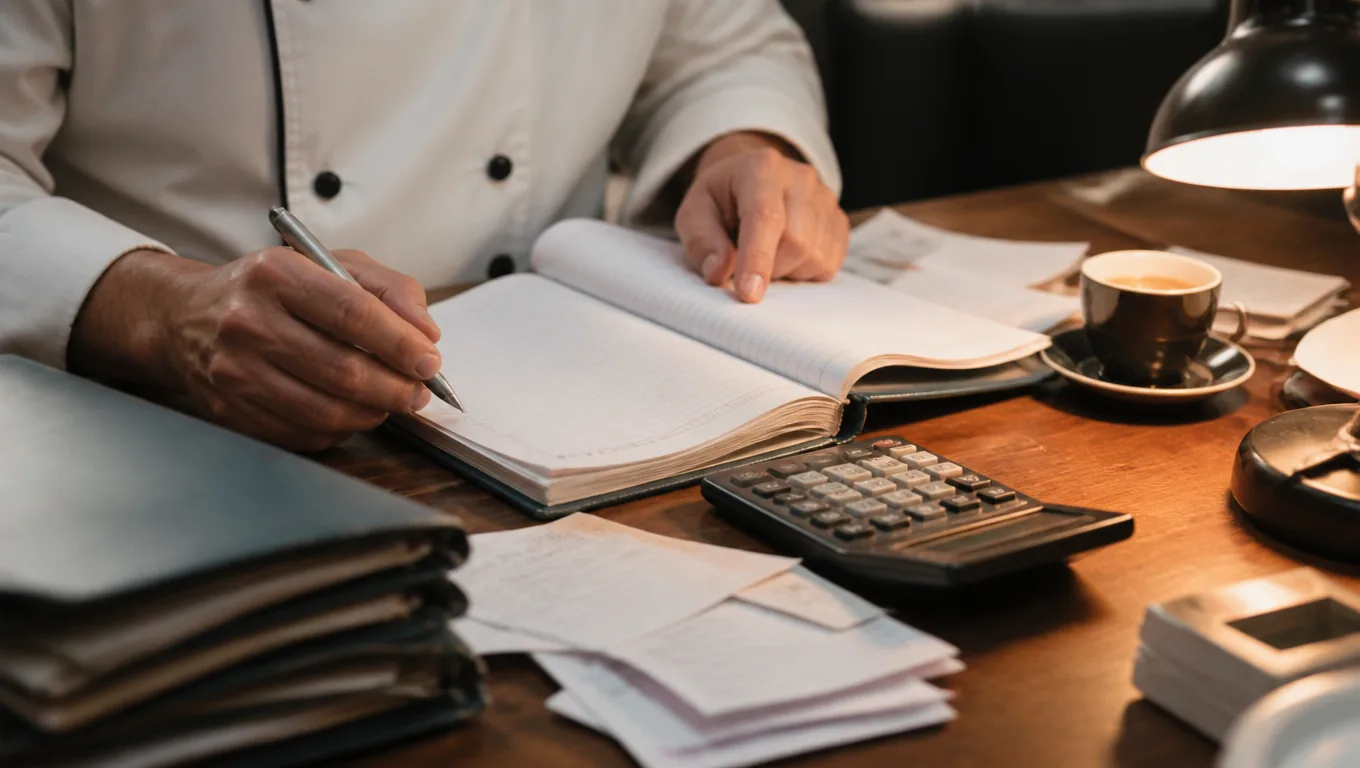
Before strategy, arithmetic. Your floor is what the dish costs you divided by the share of the price that cost is allowed to eat.
The most recent hard benchmark comes from the National Restaurant Association's Restaurant Operations Data Abstract, drawn from more than 900 operators: full-service restaurants with $2 million or more in annual sales reported food and non-alcohol beverage costs at a median of 31.0% of sales in 2024 — and operators under $2 million reported 33.7% (restaurant.org).
The same data shows why the number matters: the larger operators kept a median 4.3% of sales as pre-tax income; the smaller ones kept 1.1%.
Worked example, with your own numbers in place of mine:
| Dish | Food cost | Target food-cost share | Floor price | Menu price |
|---|---|---|---|---|
| Mushroom risotto | $4.20 | 30% | $14.00 | $16 |
| Ribeye | $12.80 | 32% | $40.00 | $42 |
| House salad | $2.10 | 25% | $8.40 | $11 |
Two cautions the NRA itself attaches to benchmarks: they describe other restaurants, not targets for yours. Low food-cost percentage isn't the goal — dollars of profit are. A $4 salad at 25% earns you $12; a $2 risotto at 18% earns you nine.
The 8 menu pricing strategies
1. Cost-plus: the multiplier floor
Multiply each dish's food cost by a target inverse (÷30% ≈ ×3.3) and round to a clean number. This is the baseline every other strategy adjusts — it guarantees you never price below cost plus margin, and it takes ten minutes with a recipe cost sheet.
2. Menu engineering: price by class, not by gut
Sort your menu into the classic four classes — stars (high profit, high popularity), plowhorses (popular but thin), puzzles (profitable but ignored), dogs (neither).
Then price by class: plowhorses get small increases (their fans won't leave over 50 cents), puzzles get visibility moves — better description, better placement — before price cuts.
Guests read menus "sequentially like a book," so what sits earlier in a category genuinely sells more; there's no magic corner to compensate with (eurekalert.org).
3. Anchoring: one high ticket changes the neighbors
Place one deliberately expensive dish in each category. It will rarely be the best seller — that's not its job.
It resets what "expensive" means, and the second-priciest dish, which you actually want to sell, reads as reasonable beside it. Keep the anchor honest: it should be a dish you'd proudly serve, just a premium one.
4. Bare-numeral presentation: drop the dollar sign
The cheapest strategy on this list costs nothing: write prices as bare numerals.
In a Cornell field study, diners spent an average of $5.55 more per check — about 8% — when the menu omitted dollar signs (news.cornell.edu).
The symbol reminds people of "the pain of paying"; the number alone reads as part of the dish's name. The same logic says skip dotted leader lines — they drag the eye straight to the money.
5. Bundling: prix fixe and combos that raise checks
A prix fixe or a two-course combo trades choice for certainty — guests spend a defined amount that's usually higher than the à la carte average.
Industry reporting on digital menu boards cites an operator who saw a 23% lift in average ticket after promoting combos on digital displays — a single case, directionally useful (foodinstitute.com).
Build bundles from a star, a plowhorse and a high-margin drink, and price the bundle just under the sum of parts.
6. Tier sizing: three sizes, one story
For soups, drinks and sides, three sizes beat two — the middle size becomes "reasonable" the moment a large exists.
Cost the large properly: the upcharge should exceed the added ingredient cost by a wide margin, because the large's real job is making the middle look smart. This is pricing as presentation; no research number needed, just margin math.
7. Market-relative pricing: know your local band
Guests price your ribeye against the other three restaurants they're considering, not against your costs. Once a quarter, pull the menus of your five closest concept competitors and map where each of your dishes sits.
You don't have to match them — but if you're 20% above the band with no visible reason (portion, quality, setting), that dish quietly loses every night.
8. Seasonal repricing: let the menu move with costs
Ingredient costs drift; menus that can't drift with them eat the difference. When tomatoes or beef move, adjust the affected dishes instead of sweeping everything — small, frequent, explainable changes beat annual shocks.
This is the strategy that quietly requires an updateable menu: repricing a printed menu means a reprint run, repricing a live menu means a save button.
How do price changes actually reach the guests?
The strategies above only work if the menu can change without ceremony. On a printed card, a price update is a design file, a print shop and a weekend of swapping table copies.
On a live menu, it's an edit and a save — the public page reflects it within about a minute, and every QR code on every table still points to the current version, because a QR code menu links to the page, not to a frozen file.
That difference is also why "changes are free and instant" matters commercially: when repricing costs nothing, you'll do it quarterly instead of yearly.
Build the menu once in a menu maker that treats updates as normal usage, and every strategy above becomes maintenance instead of a project.
What makes a price feel fair?
Strategy sets the number; fairness decides whether guests accept it. Pricing research and operator experience converge on the same short list:
- Transparency over cleverness. Guests accept a higher price for visible value — portion, ingredients, craft — far more readily than they forgive feeling tricked. A $26 dish described by its ingredients reads as honest; the same dish with a vague "market price" tag reads as a trap unless the server quotes it warmly.
- Consistency across channels. If the dine-in menu, the QR menu and the delivery listing disagree, guests notice and assume the worst. Same dish, same number, everywhere — which is another argument for running one live menu rather than parallel copies.
- Round numbers for generosity, odd numbers for precision. A round $18 signals "we decided this is fair"; a $17.50 signals "we calculated this." Neither is wrong — but mixing them randomly on one menu reads as noise.
- No ambush charges. Automatic service charges, surcharges and "COVID fees" discovered at payment undo every bit of pricing psychology on the menu. If a charge exists, it belongs on the menu, in plain sight.
Fairness compounds: a menu guests trust lets you push prices when costs demand it without losing the room. A menu guests suspect turns every increase into a grievance.
When you do raise prices, the explain-and-deliver move is small, broad and unhurried — several dishes move slightly, rather than one dish doubling.
FAQ
What is a good food cost percentage?
Use the NRA's 2024 medians as context — 31.0% of sales for full-service operators over $2 million, 33.7% for smaller ones — then manage to your own target — for many operators that lands around a third of the menu price. Percentage is a guardrail; total profit dollars are the goal.
How do you price a menu item from scratch?
Cost the recipe, divide by your target food-cost share, round to a clean number, then sanity-check against your local market band. If market says lower and cost says higher, the fix is the dish — cheaper spec, smaller portion or a higher price elsewhere.
Does removing dollar signs really increase sales?
In the Cornell field study cited above, diners spent about 8% more on average when menus used bare numerals. It's one study of one restaurant type — but it costs nothing to apply and nothing to keep.
How often should I revisit menu prices?
Quarterly for a market check, immediately for ingredient shocks. With a live menu the cost of repricing is minutes, so the habit becomes cheap — which is exactly the point.
Is ending prices in 9 good or bad?
Charm pricing is a long-standing retail practice and restaurants use it constantly; the restaurant-specific evidence is thinner than for price presentation like dollar-sign removal. Test it on your own menu — just keep the digits consistent across the card.
Quick recap
- Every price has a floor: recipe cost ÷ target food-cost share — NRA medians put food costs near 31-34% of sales.
- Strategy by class: raise plowhorses gently, give puzzles visibility, protect stars, cut dogs.
- Presentation is free margin: bare numerals, no leader lines, one honest anchor per category.
- Bundles and tiers raise checks without touching a single base price.
- Repricing should be a save button, not a print run — build on a live menu and review quarterly.
For the foundation these strategies sit on, start with our how to make a restaurant menu guide — structure first, numbers second.